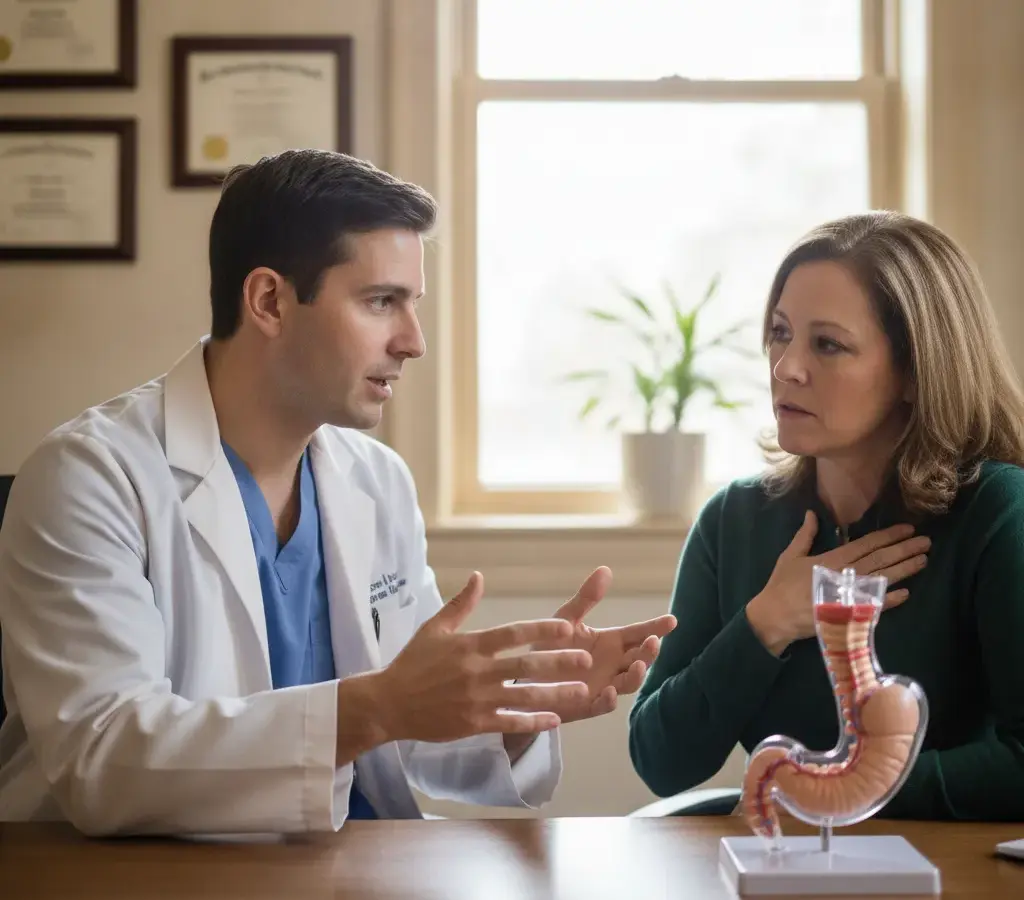
With the holiday season bringing heavier meals and richer flavors, many people dismiss digestive discomfort as simple indigestion. However, Dr. Christopher Helak, a surgeon with Novant Health, warns that frequent episodes of acid reflux may actually be a sign of gastroesophageal reflux disease, or GERD. Unlike occasional heartburn, GERD occurs when stomach contents repeatedly flow back into the esophagus, often due to anatomical abnormalities or a failure in the mechanisms meant to keep food and acid securely in the stomach.
One significant driver of this condition is a hiatal hernia, which happens when the opening between the esophagus and the abdomen stretches. This allows a portion of the stomach to shift upward into the chest cavity, compromising the body’s natural barrier against acid. The resulting sensation can manifest as sharp upper abdominal pain or intense chest burning, which Dr. Helak notes can be so severe that some patients mistake it for a heart attack.
While structural issues like hernias cannot be cured by diet alone, certain triggers can make inflammation worse. Experts suggest being mindful of alcohol, coffee, chocolate, and spicy or acidic foods. Additionally, eating late at night or lying down immediately after a meal can exacerbate symptoms for those already suffering from esophageal laxity.
Dr. Helak emphasizes that there are critical red flags that necessitate immediate medical attention. Difficulty swallowing, persistent coughing during the night, or waking up feeling as though one is choking are serious indicators that should not be ignored. For patients who find no relief through medication or lifestyle changes, surgical options are available to repair physical defects and restore normal function to the esophagus. Those struggling with persistent heartburn are encouraged to seek professional diagnostic testing rather than relying solely on home remedies.