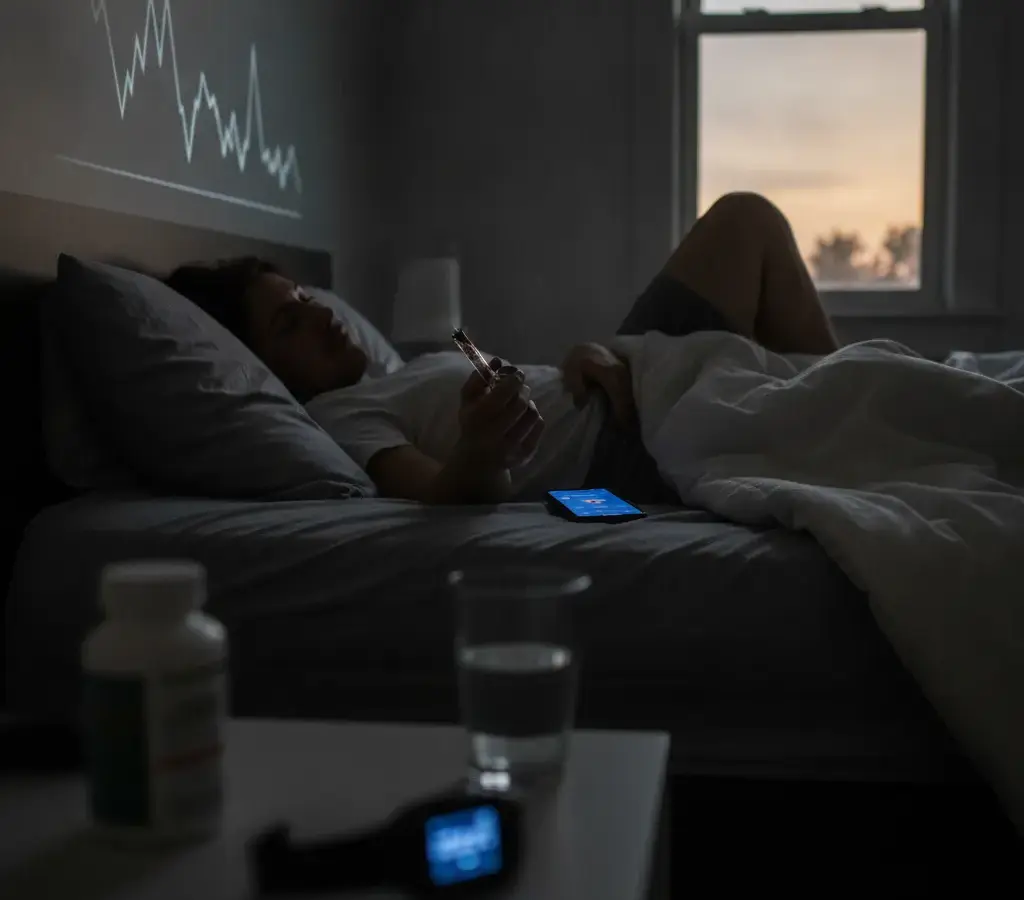
For many people, a bit of cannabis before bed feels like the perfect solution for a restless night. It helps them unwind and drift off quickly, leading to a widespread belief that the drug is an effective sleep aid. However, new research suggests that this feeling of relaxation may be masking a deeper problem. A study conducted by Northwestern Medicine indicates that while users feel they are sleeping well, their actual rest is far more fragmented than they realize.
The discrepancy comes down to how we perceive sleep versus how it actually happens. Researchers tracked over twelve hundred participants from young adulthood into middle age, using wristwatch trackers to gather objective data. While these users reported being satisfied with their slumber, the wearable technology told a different story. The data revealed that cannabis users experienced more frequent wakeups during the night and spent less total time in deep sleep compared to non-users.
According to lead researcher Dr. Thanh-Huyen Vu, the primary danger lies in this lack of awareness. Because certain strains have immediate sedative effects, users often mistake the initial act of falling asleep for high-quality rest. In reality, they may spend significant portions of the night tossing and turning without remembering it upon waking. This creates a deceptive cycle where individuals continue using a substance that is actively degrading their nocturnal recovery because they believe it is helping them.
Medical experts are now urging caution toward social media trends and marketing campaigns pushed by cannabis companies that promote the plant as a cure for insomnia. They warn that relying on these products without medical guidance could lead to long-term sleep disturbances. Instead of turning to unregulated aids, doctors recommend consulting healthcare providers to address the root causes of sleeplessness rather than settling for a perceived fix that fails under scientific scrutiny.